Dr. Gymbro
←

#vertical jump

1 article
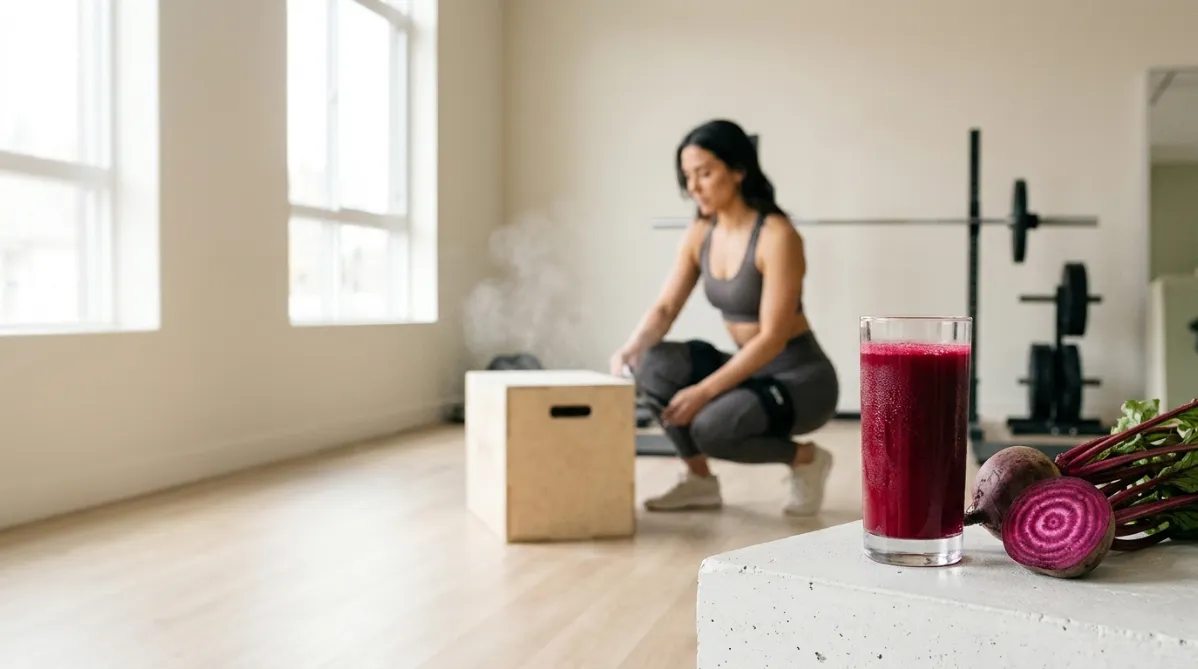
A bright, modern editorial photograph of a minimalist athletic studio with pale oak flooring and soft diffused daylight pouring in from tall windows on the left. In the foreground, slightly off-center to the right, a tall glass of deep magenta-crimson beetroot juice sits on a matte white concrete surface, condensation beading on the glass, a few fresh whole beets with leafy stems and one halved beet showing vivid concentric purple rings arranged beside it. Behind them, softly blurred with shallow depth of field, an athlete in neutral-toned athletic wear (charcoal and cream) crouches mid-prep, with slim black blood flow restriction cuff bands wrapped around the upper thighs. A clean wooden plyo box and a simple barbell rack are subtly visible in the background. A thin arc of chalk dust hangs in the air, suggesting a recent jump. The color palette is restrained and trendy: warm off-white, soft sage green, charcoal gray, with the beetroot magenta as the single bold accent. Composition follows a wide 16:9 landscape layout with generous negative space on the left third for title overlay. Lighting is natural, gentle, and slightly golden, with soft shadows and a subtle film-grain texture. The overall feel is a contemporary wellness and sports science magazine cover: clean, calm, sophisticated, tactile, with crisp detail on the juice and beets and a dreamy blur on the athlete.
science research

Suco de Beterraba + Treinamento BFR: O Salto Sob Fadiga Revela uma Vantagem de Força Ainda Não Explorada

BY DR. GYMBRO ·

Todo mundo pensa que suco de beterraba combinado com treinamento de restrição de fluxo sanguíneo (BFR) garante maiores ganhos de força. Este ensaio clínico randomizado, duplo‑cego, mostrou algo mais específico: ambos os grupos ficaram mais fortes, mas apenas o grupo que consumiu beterraba apresentou melhora significativa na altura do salto contramovimento em estado de fadiga. O estudo utilizou 8 mmol de nitrato por dia, uma fase de carga de uma semana e um programa de BFR de quatro semanas. Aqui está o protocolo, quem pode se beneficiar, quem deve evitar e por que um estudo com 20 participantes merece cautela.

This page is available in